Google has released Gemini 3.6 Flash, promising better coding, improved multimodal performance, faster agentic workflows, and greater efficiency than Gemini 3.5 Flash.
On paper, it sounds impressive.
Google describes Gemini 3.6 Flash as a fast, cost-efficient “workhorse” model designed for coding, knowledge work, multimodal tasks, and AI agents. The company also says it uses 17% fewer output tokens than Gemini 3.5 Flash while completing complex workflows with fewer reasoning steps and tool calls.
But benchmarks and launch announcements do not always reflect what happens when ordinary users try the model on practical tasks.
So, I decided to test Gemini 3.6 Flash myself.
I used it for three completely different real-world use cases:
- Coding and website creation
- AI image generation
- AI music creation
Unfortunately, Gemini 3.6 Flash disappointed me in all three tests.
What Is Gemini 3.6 Flash?
Gemini 3.6 Flash is Google’s latest speed-focused AI model in the Gemini family.
It is designed to balance intelligence, speed, and lower operating costs. Google is particularly positioning it for rapid coding cycles, agentic execution, multimodal understanding, and high-volume AI workflows.
Some of its main specifications include:
| Feature | Gemini 3.6 Flash |
|---|---|
| Context window | Up to 1 million tokens |
| Maximum output | Up to 64,000 tokens |
| Input types | Text, images, audio, video, and documents |
| Primary output | Text |
| Input pricing | $1.50 per million tokens |
| Output pricing | $7.50 per million tokens |
| Built-in tools | Search, code execution, function calling, file search, and computer use |
Google says the model offers stronger performance on complex agentic and multimodal tasks while using fewer tokens and costing less than Gemini 3.5 Flash.
Those specifications make Gemini 3.6 Flash look like a powerful model for developers, creators, businesses, and everyday AI users.
However, my practical experience was very different.
Test 1: Coding and Website Creation
Coding is one of the main capabilities Google highlights for Gemini 3.6 Flash.
Google says the model is especially effective for rapid agentic loops involving complex coding cycles and multiple iterations. It is supposed to generate code, use tools, make changes, and complete development tasks more efficiently.
That made coding the most important part of my test.
I gave Gemini 3.6 Flash a practical website-building task. I was not simply testing whether it could generate random HTML, CSS, or JavaScript. I wanted to see whether it could understand the complete objective and produce something coherent, functional, and visually polished.
The result was disappointing.
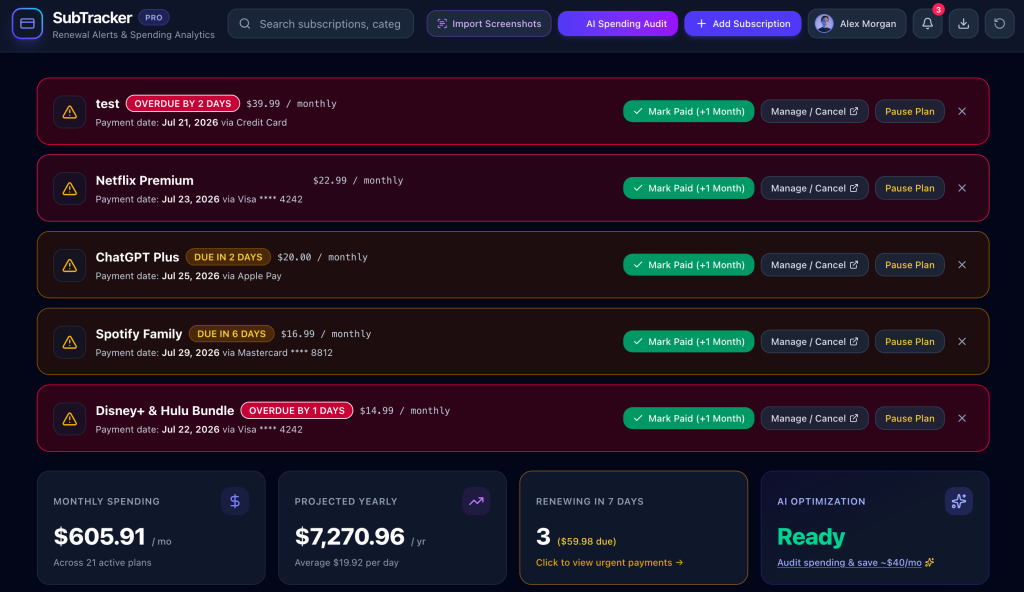
The model could generate code, but producing code is not the same as successfully completing a coding project.
Several problems became apparent:
It did not understand the complete design properly
The generated result failed to capture the intended design and structure. Some elements were placed incorrectly, while other parts felt incomplete or poorly thought out.
A capable coding model should understand the relationship between layout, visual hierarchy, functionality, and the user’s instructions.
Gemini 3.6 Flash struggled to bring those elements together.
The result lacked professional polish
The output looked more like an early prototype than a finished website.
AI-generated websites often appear acceptable at first glance, but the problems become obvious once you examine the spacing, responsiveness, typography, navigation, and smaller interface details.
A strong coding model should not only make something that technically loads. It should create something that people could realistically use.
It required too much correction
The entire purpose of using an AI coding model is to save time.

However, when you have to repeatedly explain the same requirement, fix broken sections, and correct unwanted changes, the supposed productivity advantage begins to disappear.
Gemini 3.6 Flash did not feel dependable enough to manage a complete coding workflow without close supervision.
Writing Code Is Not the Same as Building a Product
This test highlighted a larger problem with the way AI coding models are evaluated.
A model may generate hundreds or thousands of lines of code and still fail to create the requested product.
Successful AI coding requires more than code generation. The model must be able to:
- Understand the complete objective.
- Plan the project before making changes.
- Follow the requested visual direction.
- Preserve working sections during revisions.
- Detect and correct its own mistakes.
- Avoid adding unnecessary features.
- Produce a functional and polished final result.
In my test, Gemini 3.6 Flash did not demonstrate this level of reliability.
It may be fast, but speed does not help much when the output requires extensive correction.
Test 2: AI Image Generation

For the second test, I moved away from coding and tested Gemini 3.6 Flash in an AI image-generation workflow.
Creating a useful AI image requires much more than recognizing a few keywords.
The system needs to understand:
- The main subject
- Composition and positioning
- Image dimensions
- Lighting and atmosphere
- Colors and visual style
- Text placement
- The purpose of the image
- Which elements should receive the most attention
This is particularly important for professional content such as YouTube thumbnails, advertisements, blog graphics, social-media posts, and website visuals.
Once again, the result was underwhelming.
The output did not follow the instructions closely enough
The generated image failed to accurately reflect the creative direction.
Some elements were incorrect, the composition was weak, and the final result did not feel controlled. Instead of translating the prompt into a clear visual, the workflow produced something that required more revisions.
The composition was not effective
A successful image needs a clear focal point.
The viewer should immediately understand where to look and which part of the image is most important. This is especially critical for YouTube thumbnails, where viewers make a decision in a fraction of a second.
The generated result did not have a sufficiently strong visual hierarchy.
The result did not feel professionally usable
Below is image generation with gemini 3.6 flash vs Chatgpt 5.6

An image can be colourful and technically detailed while still being unusable.
Professional creative work requires accuracy, consistency, and purpose. The image must match the original idea rather than simply looking like generic AI artwork.
Based on this test, Gemini 3.6 Flash did not provide the level of creative control I expected.
Test 3: AI Music Generation
For my third test, I tried a completely different creative task: music generation.
Music is an interesting test because it requires the AI to understand emotion, progression, rhythm, atmosphere, and the intended use of the track.
For example, music created for a YouTube introduction must immediately capture attention without overpowering the voice. Background music for a tutorial must maintain energy without becoming distracting.
A successful generated track should have:
- A clear beginning and progression
- The requested emotional tone
- Appropriate energy
- Variation rather than endless repetition
- A coherent arrangement
- Sufficient quality for real-world use
Unfortunately, the result was again disappointing.
The music did not match the intended direction
The generated result failed to capture the requested mood convincingly.
It felt generic rather than specifically created for the prompt.
The arrangement lacked development
Good music should evolve.
It needs changes in intensity, structure, and instrumentation. The generated output felt repetitive and did not develop into a convincing complete track.
It was not something I would use
This is ultimately the most important test.
Regardless of how technically impressive an AI system may appear, the final question is simple:
Would I actually use the result in a real project?
In this case, the answer was no.
The music did not feel polished or purposeful enough for professional content.
Benchmarks Versus Real-World Performance
Google reports improvements for Gemini 3.6 Flash across coding, knowledge work, multimodal tasks, user-interface control, and long-context evaluations. Google also says the model makes fewer unnecessary code changes and completes certain workflows using fewer tokens and tool calls.
Those improvements may be genuine under Google’s testing conditions.
However, benchmarks do not always represent the full user experience.
Benchmarks test clearly defined problems
A benchmark normally gives the model a specific task with a measurable correct answer.
Real-world projects are often much more complicated. They involve visual preferences, unclear requirements, multiple constraints, and repeated feedback.
Efficiency does not guarantee quality
Using fewer tokens can reduce costs and response time.
However, a shorter or faster response is not automatically a better response. If the final result is inaccurate, poorly designed, or unusable, token efficiency becomes less important.
Different interfaces can produce different results
Gemini models are available through several platforms, including the Gemini app, Google AI Studio, the Gemini API, Android Studio, and agentic development environments.
The surrounding tools, system instructions, integrations, and interface can significantly affect the result.
Model performance can be inconsistent
An AI model may perform extremely well on one prompt and poorly on another.
This inconsistency makes it difficult to rely on the model for important work without checking every result carefully.
Is Gemini 3.6 Flash Completely Useless?
No.
Gemini 3.6 Flash still has several potential advantages.
It is fast, has a large context window, supports multimodal inputs, provides access to several built-in tools, and is cheaper to operate than many larger flagship models.
It may work well for tasks such as:
- Summarising documents
- Extracting information
- Creating basic drafts
- Answering quick questions
- Processing large amounts of text
- Handling repetitive workflows
- Acting as a lower-cost model inside a carefully designed AI agent
- Producing initial ideas that will later be reviewed by a human
The model may also perform better when given extremely detailed prompts and carefully controlled instructions.
However, that is different from being a dependable all-purpose model.
For tasks involving professional coding, precise creative direction, or finished media, I would not trust the output without thoroughly checking it.
Gemini 3.6 Flash: Pros and Cons
Advantages
- Fast responses
- Lower cost than Gemini 3.5 Flash
- Large one-million-token context window
- Supports text, images, audio, video, and document inputs
- Built-in tool support
- Potentially useful for high-volume workflows
- Improved token efficiency
- Suitable for quick drafts and basic tasks
Disadvantages
- Coding output lacked reliability
- Website result required too many corrections
- Creative instructions were not followed accurately
- Image composition was disappointing
- Music output felt generic and repetitive
- Results did not match the excitement surrounding the release
- Close human supervision was still necessary
Who Should Use Gemini 3.6 Flash?
Gemini 3.6 Flash could be useful for developers and businesses that need a fast, lower-cost model for large numbers of relatively straightforward tasks.
It may also be suitable for users who want quick answers, rough drafts, summaries, document analysis, or basic coding assistance.
However, creators and developers who need highly polished results may be better served by a stronger model, even if that model costs more or takes longer to respond.
For complex work, reliability is usually more important than raw speed.
My Final Verdict
Gemini 3.6 Flash arrived with impressive promises.
Google presents it as a faster, more efficient model with better coding, multimodal understanding, knowledge work, and agentic capabilities.
But based on my practical testing, the experience did not match the marketing.
I tested Gemini 3.6 Flash in three areas:
- Coding and website creation
- AI image generation
- AI music creation
It disappointed me in all three.
The coding result was not polished or reliable enough. The image-generation workflow failed to follow the creative direction accurately. The music output did not feel convincing or professionally usable.
Gemini 3.6 Flash may be fast and affordable, but those advantages are meaningful only when the final output is good enough to use.
For now, I see it as a lower-cost model for basic tasks and experimentation—not as a dependable replacement for the strongest coding and creative AI tools.
Google may improve the model over time, but based on my current experience, Gemini 3.6 Flash feels far less impressive than its specifications and benchmark results suggest.
Frequently Asked Questions
Is Gemini 3.6 Flash good for coding?
Google promotes coding as one of Gemini 3.6 Flash’s primary capabilities. However, in my practical website-building test, the model required too many corrections and did not produce a sufficiently polished result.
Is Gemini 3.6 Flash better than Gemini 3.5 Flash?
Google reports that Gemini 3.6 Flash provides better coding, knowledge-work, and multimodal performance while using 17% fewer output tokens. Real-world results can still vary depending on the task and prompt.
What is the context window of Gemini 3.6 Flash?
Gemini 3.6 Flash supports a context window of up to one million tokens and a maximum output of 64,000 tokens.
How much does Gemini 3.6 Flash cost?
Google lists API pricing of $1.50 per million input tokens and $7.50 per million output tokens.
Can Gemini 3.6 Flash understand images and videos?
Yes. The model supports multimodal inputs, including text, images, audio, video, and documents. Its primary output is text.
Is Gemini 3.6 Flash worth using?
It may be worth trying for summaries, quick drafts, document processing, basic coding assistance, and lower-cost automation. For complex coding or polished creative work, the results should be reviewed carefully.
Is Gemini 3.6 Flash the best AI model?
Based on my testing, no. Although it is fast and cost-efficient, it did not deliver the quality and reliability I expected across coding, image creation, and music generation.